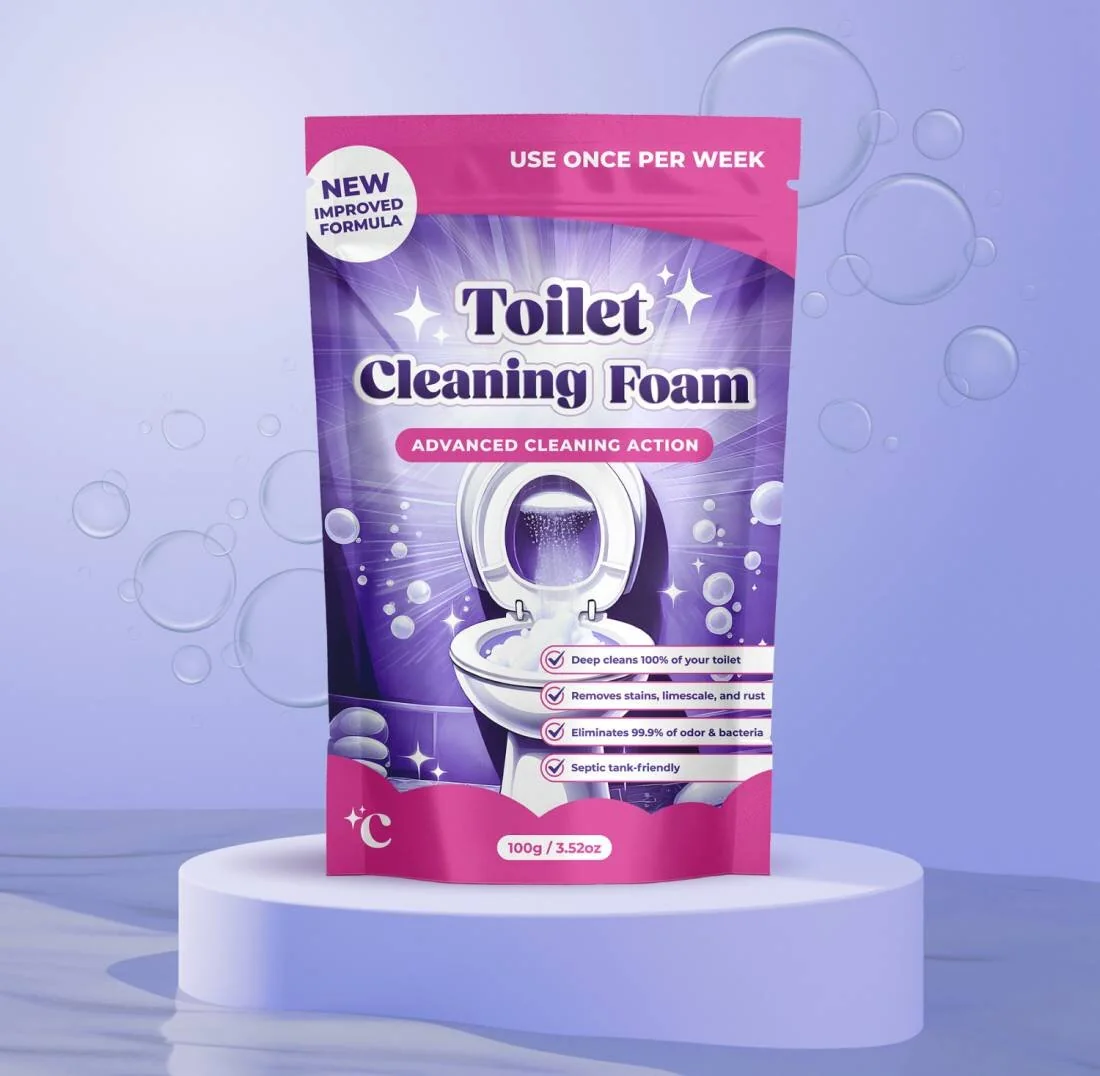
FizzClean for Hard Water and Limescale. Understand toilet rings, mineral buildup and what FizzClean can reasonably remove. The buying details and cleaning guidance below help you judge the product without confusing visible foam with verified cleaning performance.
What causes hard-water toilet rings?
Hard water contains dissolved minerals, especially calcium and magnesium. When water evaporates or deposits accumulate, mineral residue can remain on the bowl. Stains may also contain iron, dirt or other material, so a coloured ring is not proof of one specific chemical cause.
A shopper living outside the United States: Use local currency conversion and shipping charges to judge the real cost. An order priced in dollars may be affected by card exchange fees and import rules. Check the merchant’s country list before assuming worldwide delivery.
A practical household routine also includes storage and safe handling. Close the pack after use, keep it away from children and pets, and never add bleach, vinegar or another cleaner to make a stronger reaction. Check the label before applying it to anything other than the intended bowl.
Why mineral scale can be hard to shift
Old deposits may be thick and firmly attached to porcelain. A product that quickly removes fresh dirt may have little effect on dense scale. The correct approach depends on whether the deposit is mineral, rust-related or ordinary soil.
A property with a septic tank: Check any compatibility claim against your actual system and the packet instructions. Avoid repeated unnecessary chemical use and follow established septic maintenance rules. The EPA has practical homeowner guidance.
For a purchase decision, compare the full price including delivery with how often you expect to use the powder. A lower cost per pack is not useful when a bundle is too large for your needs. Save the order confirmation in case the parcel or refund requires follow-up.
Does FizzClean remove limescale?
FizzClean is promoted for toilet-bowl staining, but the precise effectiveness against a thick mineral deposit cannot be guaranteed from a foam demonstration. A full ingredient list and controlled testing would help answer how it compares with a dedicated descaler.
An adult who wants less physical scrubbing: A wait-and-flush approach may make routine maintenance more comfortable, but do not force a difficult reach when dispensing powder. A safe, modest cleaning routine is better than a dramatic claim that still leaves you doing awkward work.
If you are uncertain whether the stain is mineral scale, dirt or rust, stop and identify the cause. A gentle, suitable cleaner may handle ordinary residue, while a specialised approach can be needed for deposits. Never improvise mixtures to tackle a stubborn ring.
Compare FizzClean before you order
Check the current package options, shipping to your country and the seller’s terms before making a payment. Purchases take place on the seller’s website.
See FizzClean packages ↗Affiliate link. We may earn a commission if you buy.
How to tell whether you have a mineral problem
Check taps, showerheads and kettles for chalky white residue. If several fixtures show deposits, your water may be hard. Water hardness varies by area, and a utility report or water test is more useful than guessing from toilet colour alone.
A household with one bathroom: If one bathroom is cleaned weekly, a small trial may be enough to see whether the convenience justifies a repeat order. Keep a simple record of how long a pack lasts. The best unit price does not matter if most of a bulk purchase sits unused.
If the product does not match that situation, do not keep repeating the application. Look for the reason the stain persists, check the product label and choose a suitable cleaning method. A strong purchase decision begins with the problem you actually need solved, not a promotional saving.
Why a brown stain might not be limescale
Rust-like colour can come from iron or other sources and may need a different treatment. A stain at one point can also reflect how water runs into the bowl. If it returns quickly, consider a water quality or plumbing explanation rather than assuming a cleaner has failed.
A household with several toilets: More toilets mean more frequent product use and may change the maths of buying several packs. Keep the same measuring method across bathrooms and compare how the foam behaves in bowls with different water levels.
Take time to compare the appearance of the bowl before and after the recommended treatment. Keep lighting and the use of other cleaners consistent. That way you can tell what changed. If the only change is the amount of foam, that is not the same as removing the original mark.
The difference between cleaning and water treatment
Cleaning removes material already on the surface. Water treatment addresses the water that repeatedly brings dissolved minerals into fixtures. If buildup returns fast, changing cleaners alone may not solve the underlying cause.
A bathroom with hard-water staining: Try to separate fresh dirt from fixed mineral deposits. The USGS explains that hardness relates to dissolved minerals in water. A product that improves ordinary residue may not solve recurring scale caused by the water supply.
A practical household routine also includes storage and safe handling. Close the pack after use, keep it away from children and pets, and never add bleach, vinegar or another cleaner to make a stronger reaction. Check the label before applying it to anything other than the intended bowl.
What a careful test should look like
Choose a visible area of ordinary residue, follow label directions and compare the same area afterward. Do not scrape porcelain with sharp tools, and do not combine acids or bleach with powder. If the ring is clearly mineral scale, a labelled descaling product may be more appropriate.
A home with children or pets: Store cleaning powder high up or locked away in its original packet. Make sure nobody uses the treated toilet until the cleaning step is finished and the bowl has been flushed according to the product directions.
For a purchase decision, compare the full price including delivery with how often you expect to use the powder. A lower cost per pack is not useful when a bundle is too large for your needs. Save the order confirmation in case the parcel or refund requires follow-up.
Compare FizzClean before you order
Check the current package options, shipping to your country and the seller’s terms before making a payment. Purchases take place on the seller’s website.
See FizzClean packages ↗Affiliate link. We may earn a commission if you buy.
Can you prevent deposits entirely?
Regular cleaning can reduce visible buildup, but it cannot change the mineral content of incoming water. Keeping the bathroom routine consistent, checking for running toilets and understanding local water conditions can be more effective than repeating dramatic one-off treatments.
A household cleaning after an illness: The need may be disinfecting rather than cosmetic cleaning. Follow public-health guidance, especially for high-touch surfaces like flush handles and seat areas. Do not mix products or assume a foaming bowl cleaner is a registered disinfectant.
If you are uncertain whether the stain is mineral scale, dirt or rust, stop and identify the cause. A gentle, suitable cleaner may handle ordinary residue, while a specialised approach can be needed for deposits. Never improvise mixtures to tackle a stubborn ring.
Hard water and the age of the toilet
Older toilets may have scratched glaze, persistent stains or worn fittings that make cleaning difficult. Do not use abrasive improvised methods that could damage surfaces. In extreme cases, surface wear rather than dirt is the main reason a bowl looks discoloured.
A shopper living outside the United States: Use local currency conversion and shipping charges to judge the real cost. An order priced in dollars may be affected by card exchange fees and import rules. Check the merchant’s country list before assuming worldwide delivery.
If the product does not match that situation, do not keep repeating the application. Look for the reason the stain persists, check the product label and choose a suitable cleaning method. A strong purchase decision begins with the problem you actually need solved, not a promotional saving.
When FizzClean may still be useful
If your routine problem is fresh bowl residue alongside mild staining, a foaming cleaner may make upkeep easier. Keep expectations separate for thick scale, rust and water-related problems.
A property with a septic tank: Check any compatibility claim against your actual system and the packet instructions. Avoid repeated unnecessary chemical use and follow established septic maintenance rules. The EPA has practical homeowner guidance.
Take time to compare the appearance of the bowl before and after the recommended treatment. Keep lighting and the use of other cleaners consistent. That way you can tell what changed. If the only change is the amount of foam, that is not the same as removing the original mark.
FizzClean price comparison at a glance
These are the listed package prices supplied in the checkout screenshot on 6 November 2026. The seller controls availability, currency, delivery and final taxes. All four offers can change without notice.
| Pack | Price per pack | Total before extras |
|---|---|---|
| 2 packs | $25.59 | $51.18 |
| 3 packs | $21.95 | $65.85 |
| 4 packs | $18.95 | $75.80 |
| 5 packs | $15.29 | $76.45 |
Start with the actual job in your bathroom
A toilet can look dirty for several unrelated reasons. Soft, fresh residue is a different challenge from a mineral ring that has built up for months. Brown streaks, a chalky white crust and spots under the rim may need different treatment. Before spending money, look closely at the mark you want to remove. Is it under the water, around the waterline or high on the bowl? Does it wipe away with a standard brush, or does it feel hard and fixed? Answering those questions prevents an unfair comparison between a routine toilet cleaner and a specialised descaler. It also helps you avoid repeating the same purchase when the underlying problem is hard water or worn bathroom fittings.
A straightforward first-use checklist
Read the package directions and warnings before opening the powder. The advertised routine uses about one tablespoon, a wait of roughly twenty minutes and a final flush, but the instructions on the product you receive take precedence. Do not add more than instructed or mix it with any other cleaner. Keep children and pets away while the product is in use and provide ventilation where practical. Check the bowl after flushing. If the deposit is still there, identify whether it needs gentle brushing or a different treatment. Never try a new mixture just to create more foam. You want a cleaner toilet without chemical exposure, damaged surfaces or unnecessary costs.
Cleaning is different from killing germs
The word “clean” describes removal of dirt and impurities. “Disinfect” makes a separate claim about killing germs when a registered product is used in the right way. A toilet that looks brighter is not proof of disinfection. The CDC explains that routine household cleaning is usually appropriate for many surfaces, while disinfecting may matter when someone is ill. The contact time and surface directions on a disinfectant label are part of its correct use. If you need to disinfect a bathroom, choose a product authorised for that purpose. Do not rely on visible bubbles or an unsupported percentage claim about bacteria.
What the research can and cannot tell you
Government guidance explains how cleaning products should be handled, why mineral deposits occur and how septic systems are maintained. Those sources do not test this particular pack of FizzClean or prove its advertised benefits. It would be misleading to cite general water science as evidence that a specific product removes every limescale mark. Equally, a public-health cleaning guide cannot confirm a merchant’s delivery speed or refund performance. Use the linked resources to understand the chemistry and safety principles, then judge product-specific claims by the label, reliable test information and your own experience. Keeping those two kinds of evidence separate makes a buying decision clearer.
A price comparison without marketing tricks
The package screenshot supplied for this review shows two packs for $51.18, three for $65.85, four for $75.80 and five for $76.45. Those totals are calculated from the displayed prices per pack. They do not include any extra shipping, tax or international payment fees. The 5-pack costs only sixty-five cents more than the 4-pack at those prices. That sounds appealing, but a large order makes sense only when you expect to use the product. Check the merchant’s final screen for current prices and any added items. A percentage-off banner is not a substitute for comparing what you actually pay.
Think about the whole household
The cleaner will usually be bought by an adult who manages household chores, but the people around it matter too. Some homes have children who may be curious about a colourful packet, pets that explore bathrooms or family members who are sensitive to strong smells. Store the powder securely in its original packaging, keep the room reasonably ventilated and do not leave a prepared toilet unattended where someone might use it. Adults who find bending or scrubbing uncomfortable may appreciate a simpler routine, yet careful handling is still needed. If reaching the bowl safely is difficult, ask another person to help instead of leaning awkwardly over the toilet.
Returns, deliveries and buying from abroad
This site serves readers worldwide, but the seller controls which countries it delivers to. Before paying, enter your location and confirm that shipping is available. Look at the final payment currency, tax treatment, delivery estimate and any local import charges. The merchant advertises a thirty-day money-back guarantee; the written conditions determine eligibility, whether used packs qualify and who pays return shipping. Save the checkout terms and your order confirmation. Contact the merchant shown on your receipt for delivery or refund issues, because a review website does not process purchases. These details can matter more than a small difference between unit prices.
When not to use more of the same product
Repeatedly adding cleaner is not a substitute for working out why a problem continues. A recurring chalky ring may reflect hard water. Slow flushing, gurgling or rising wastewater can indicate a plumbing issue. A spreading stain on a damaged finish may not be removable by ordinary washing. If there is an unusual smell, chemical spill or irritation during use, stop and follow the label and local safety advice. Do not keep adding more powder in the hope of a stronger reaction. Find the underlying cause and choose a solution that matches it, whether that means another cleaner, testing your water or contacting a professional.
Research and safety references
These sources explain household cleaning, chemical safety, water hardness and septic care. They do not provide an independent laboratory test of FizzClean or endorse its advertised performance.
- CDC: cleaning and disinfecting the home
- CDC: bleach safety and chemical mixing
- US EPA: septic system care
- USGS: hard water and minerals
- US EPA: disinfectant products
- Poison Control: cleaning-product mixing
Compare FizzClean before you order
Check the current package options, shipping to your country and the seller’s terms before making a payment. Purchases take place on the seller’s website.
See FizzClean packages ↗Affiliate link. We may earn a commission if you buy.